140. CALLING
October 15, 2026
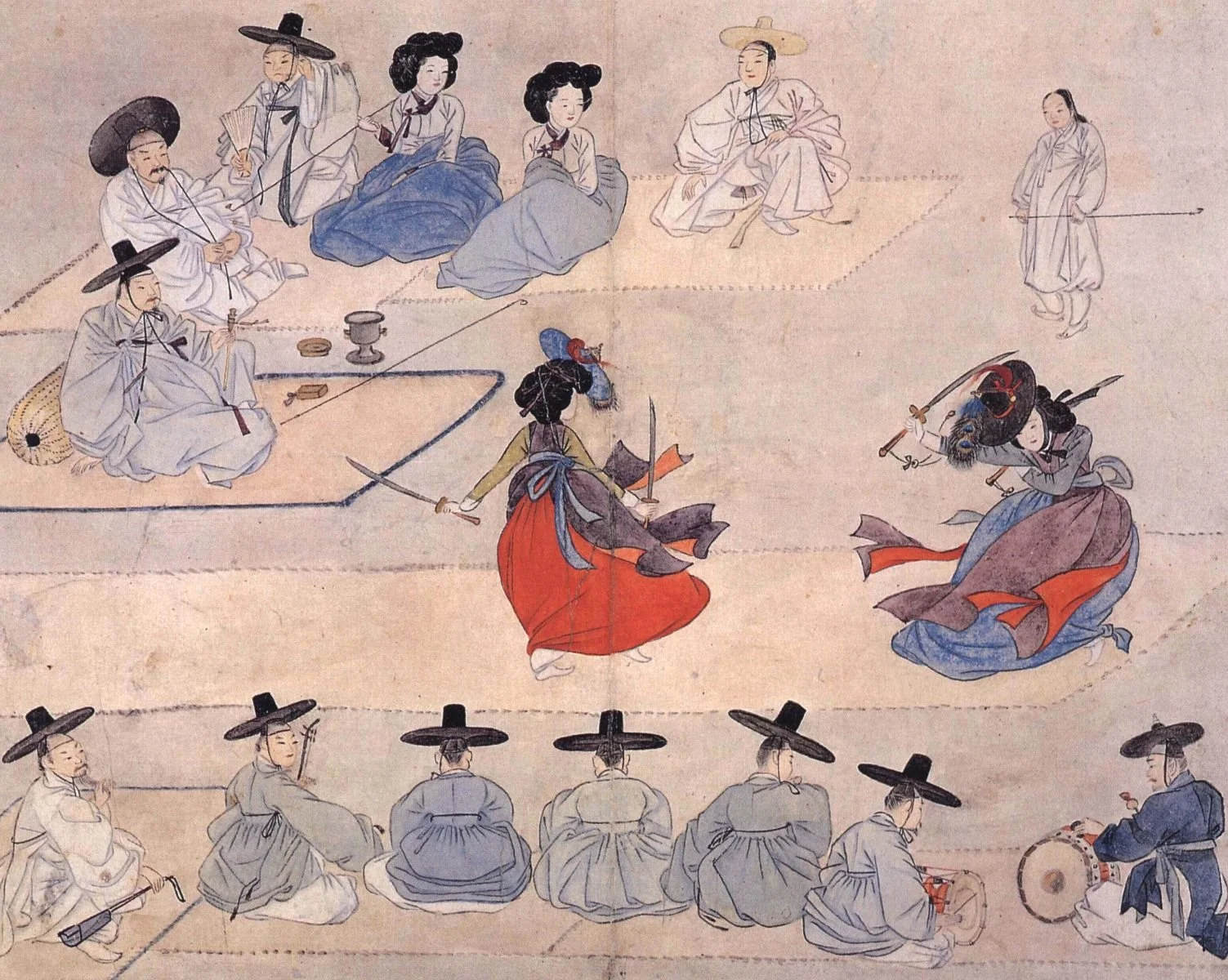
As is generally true of those we call “shamans” elsewhere in the world, Korean mansin like Yongsu’s Mother are claimed by gods or spirits who make their desires known through inexplicable illness, visions, voices, vivid dreaming, and the manic behavior that sometimes risks a diagnosis of insanity. Typically, a woman [1] resists the calling, sometimes for several years, until she, her family, and her community are convinced that unless she agrees to receive the gods and serve them as a mansin, they will continue to torment her with illness and misfortune and also affect the fates of those who are close to her.
(Source: Ye, Lao. “Painting as a Core Tool for Korean Shaman.” Ye’s Blog, October 1, 2022. Image: Ssanggeomdaemu (Double-Sword Dance) by Shin Yun-bok, Public domain, via Wikimedia Commons.)
The shaman rituals were the rituals of dancing women probably contributed to the Confucian denigration of these activities as ùmsa “lewd” or “obscene” rites (Yi Nunghwa, 1976 [1927]). The dancing shaman offended both the Confucian notions of women’s proper conduct—constrained and sequestered—and the proper conduct of rituals according to the rules of propriety, ye (Deuchler, 1977). The notion that shaman rituals are, in some sense, innately “lewd” persists into the present. I have told how an officer from the district police station threatened to arrest the mansin [1] who were conducting a kut (shaman rituals) on the charge that they were “dancing to drum music and students were watching” (Kendall, 1985, p. 62).
(Source: Ye, Lao. "Wife of the Jealous Gods: Mudang, Korean Shaman.” Ye’s Blog, June 4, 2022.)
Related: THE BIG FISH, DANCE TO BELONG, ROOT-AND FLOWER, DEMONSTRATION, THE YOGI, EXTRAORDINARY